This is not marketing. It is what no one had the courage to tell you.
While You Were Taking the Pill, Your Penis Was Dying From the Inside.
The pharmaceutical industry knew this from the very beginning. And kept selling you the pill regardless.
You’re going to resent me for this.
Not for what I’m going to sell you.
For what I’m going to show you was happening whilst you thought you were being treated.
Because there is a question no doctor ever asked you.
A question that changes everything.
And if someone had asked you that question two years ago, you wouldn’t be reading this now.
The question is:
"Does the pill you take treat erectile dysfunction — or does it treat the symptom of erectile dysfunction?"
Take a breath. Because the answer is going to change the way you look at every single pill you’ve ever taken.
What Is Happening Inside Your Body Right Now — As You Read This
There is a process that begins slowly.
So slowly you don’t notice it.
It doesn’t hurt.
It doesn’t bleed.
It doesn’t show up in a blood test.
It doesn’t show up in the testosterone panel your GP ordered that came back normal.
It doesn’t show up in anything standard medicine knows how to look for.
But it is happening.
Right now.
As you read.
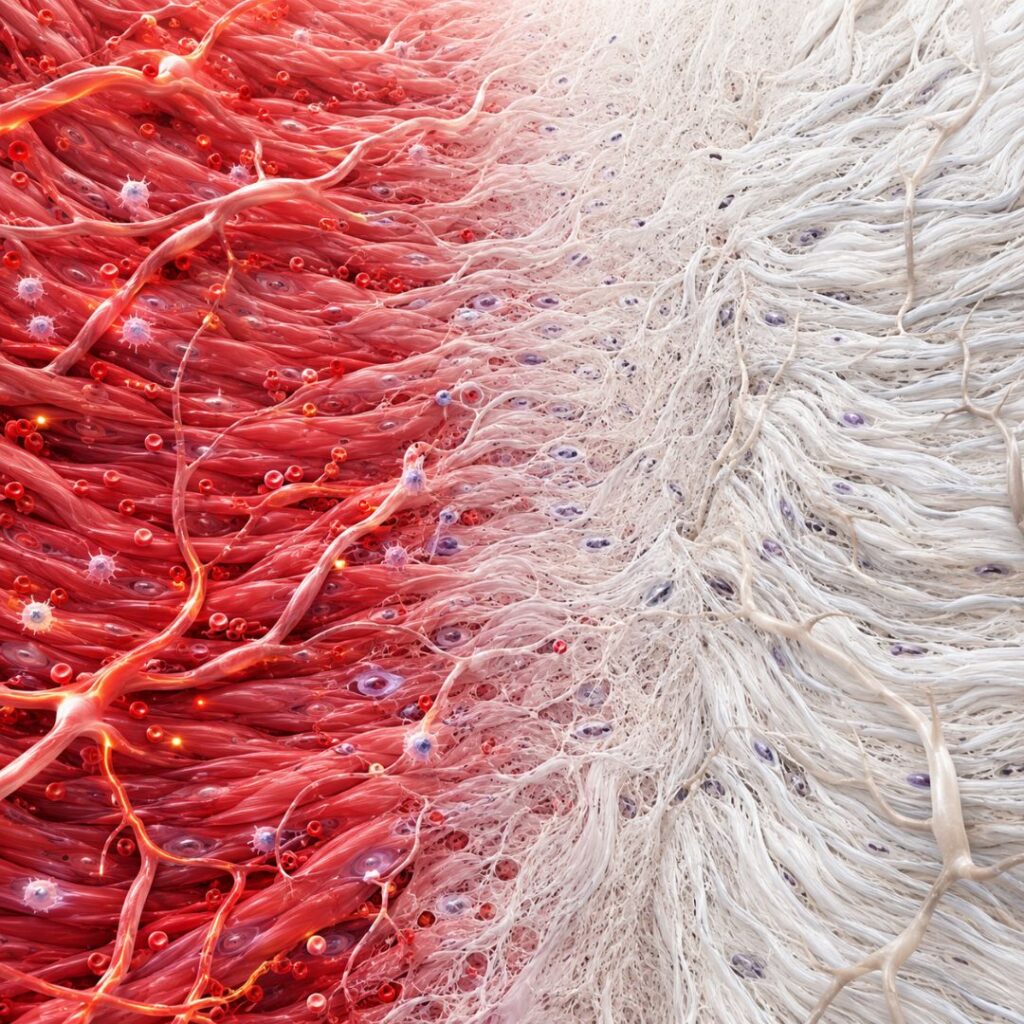
It is called silent cavernous fibrosis.
And here is what it does to you:
The smooth muscle of your corpus cavernosum — the tissue that must contract and relax for an erection to occur and be sustained — is being replaced by collagen.
Rigid tissue.
Dead tissue.
The same material as scar tissue.
Cell by cell. Week by week.
Every month the tissue goes without full neuromuscular activation, more living muscle becomes inert collagen.
It is irreversible beyond a certain point.
And that point has a clinical name you do not want to hear a doctor say about you.
To understand the scale of the problem:
Urologists who perform prostate surgery initiate a penile neuromuscular rehabilitation protocol immediately after the operation — before the patient has even been discharged from hospital.
Why?
Because they know that if the cavernous muscle goes without neuromuscular activation for weeks, fibrosis sets in permanently.
The tissue does not recover. The window closes.
They race against the clock to preserve what you have spent years quietly allowing to deteriorate — whilst the pill told you everything was fine.
But here is what will make you stop breathing for a moment:
The fibrosis that doctors rush to prevent in surgical patients is exactly the same fibrosis that has been advancing in you — more slowly, more silently — since the first month your erections stopped being reliable.
And the pill you’ve been taking all this time?
It didn’t just fail to stop it.
It ensured you wouldn’t notice it was happening.
The Betrayal That Lasted Years
You need to understand what Viagra actually does.
Not what the leaflet says — what it genuinely does, what it doesn’t do, and why that distinction has cost you years of your sex life.
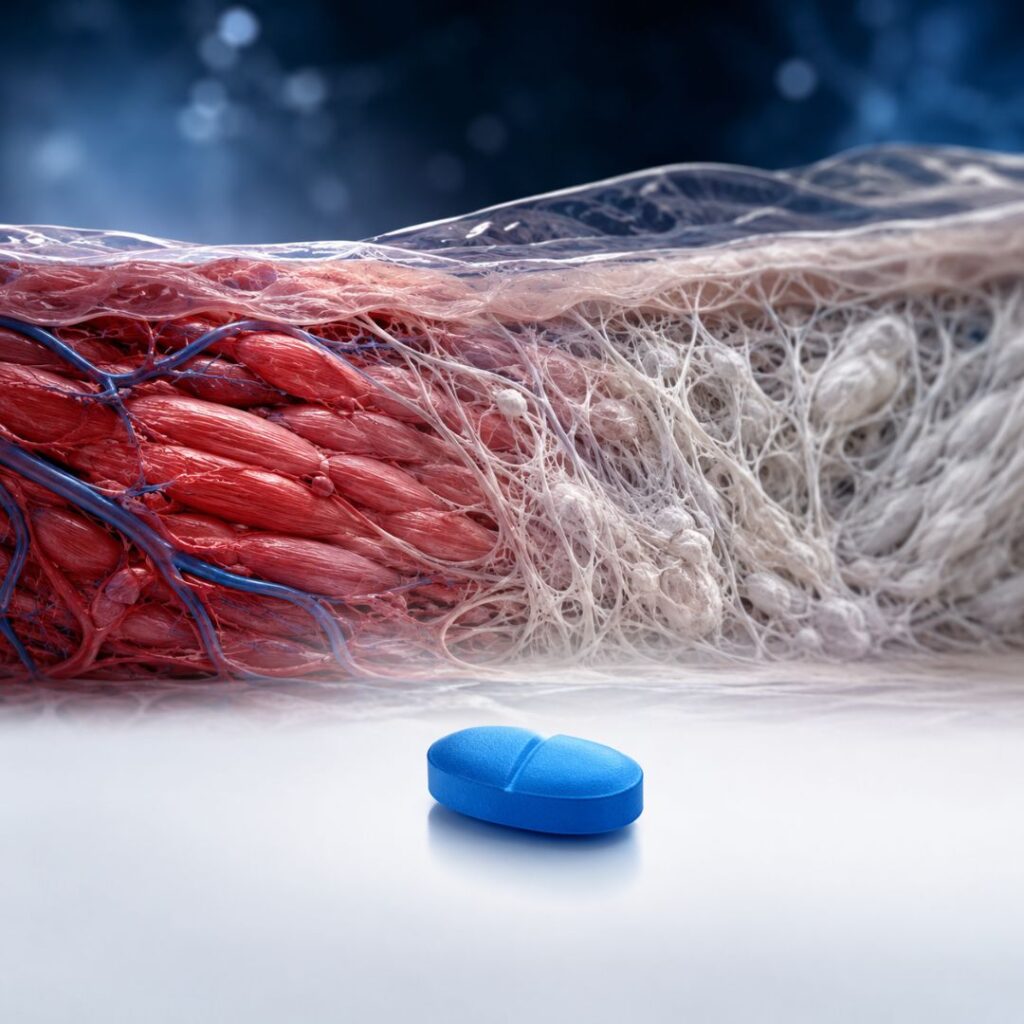
Sildenafil inhibits an enzyme called PDE5.
This relaxes the penile blood vessels.
Blood flows in more easily.
An erection occurs.
That is it. That is all it does.
It does not touch the cavernous nerve.
It does not touch the smooth muscle.
It does not touch the neuromuscular pathway that is the root of the problem.
It does not prevent, reverse, or even slow silent cavernous fibrosis.
What it does is force blood into a system that is progressively losing its capacity to use it properly.
Imagine a muscle immobilised in plaster for three months.
The plaster comes off.
The muscle doesn't work.
Not because the bone broke again. Because the muscle has atrophied.
The neuromuscular pathway has weakened. The nerve has lost its transmission efficiency. What does a competent physiotherapist do?
Electrical muscle stimulation.
Forces the nerve to retransmit.
Forces the muscle to contract. Rebuilds the connection from the inside out.
What would an incompetent doctor do?
Give you a painkiller.
The muscle would continue atrophying.
The pain would disappear. The muscle would die.
Viagra is the painkiller. You've spent years without the physiotherapist.
And the industry knew this.
It knew the pill didn’t treat the neuromuscular pathway.
It knew that without neuromuscular treatment, tissue deteriorates progressively.
It knew that deterioration made men more dependent on the pill over time — not less.
A customer who recovers stops buying.
A customer who depends on the product buys forever.
You were the perfect customer.
"But the pill worked. If it wasn't treating anything, why did it work?"
Because working is different from treating.
Morphine works for appendicitis pain.
It doesn’t treat appendicitis. The appendix keeps inflaming.
Keeps progressing.
And one day the morphine isn’t enough — because the appendix has burst.
Viagra worked because there was still sufficient functional cavernous muscle tissue to respond to the blood influx.
Whilst there was.
Now think about the man who notices the pill is losing its effect.
Who needs a higher dose.
Who on one specific night — with one specific person — took the pill and still couldn’t manage.
That moment has a biological name.
It is called fibrosis at pharmacological resistance stage.
The tissue has lost enough functional muscle mass for blood influx alone to no longer generate sustainable rigidity.
The muscle that should contract to sustain the erection has been replaced by collagen that cannot contract.
The pill stopped working because what the pill needed in order to work was gone — lost during all the years you thought you were fine.
This is not fate. This is not ageing. This is not "your time".
It is the predictable, avoidable result of years spent treating the symptom instead of the neuromuscular pathway.
And what makes this devastating is that there is a point — a specific point, crossed silently, without warning — beyond which reversal is no longer possible.
Advanced fibrosis does not reverse. Dead tissue does not resurrect. A nerve that has lost its muscular substrate has nowhere left to transmit to.
The question is: have you already crossed that point — or haven't you yet?
The Three Stages. Which One Are You At?
This is not theory.
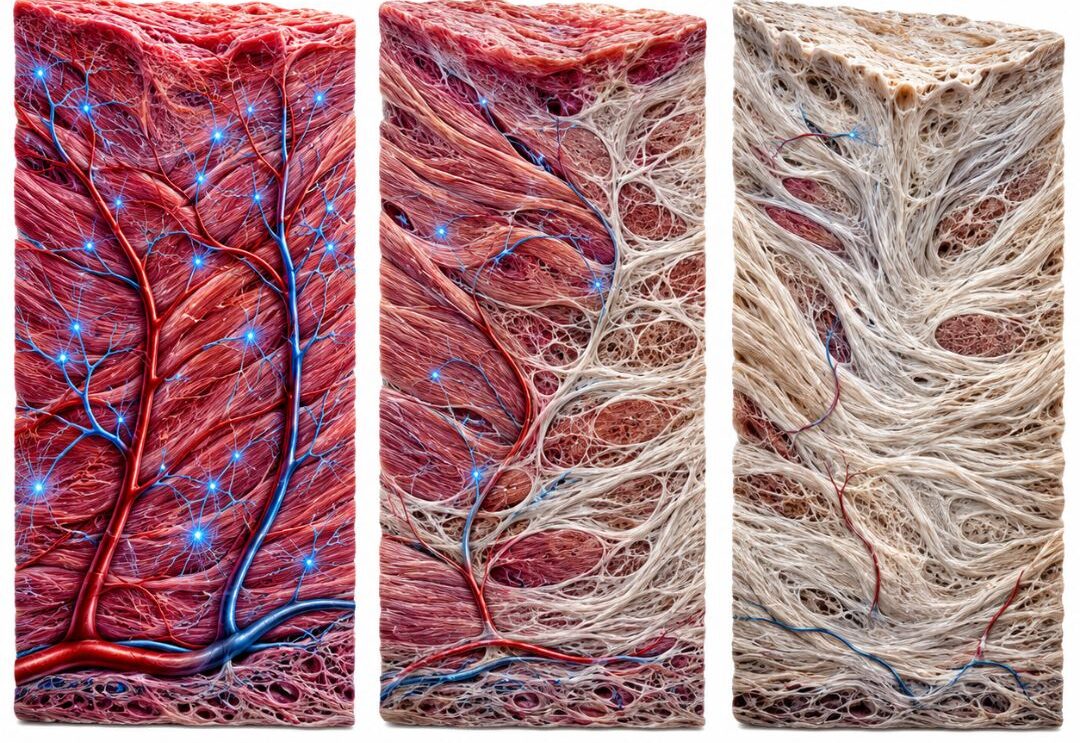
It is the clinical protocol used by rehabilitation urologists to classify the degree of cavernous neuromuscular impairment.
I’ll translate it without euphemism.
Stage 1 — The Elastic Coma
The neuromuscular pathway is compromised but the muscle tissue is still alive.
The nerve transmits a weak signal.
The muscle responds inconsistently.
You have good days and bad days — and don’t understand why.
The pill still works, but you depend on it.
Spontaneous morning erections have become rare or have disappeared entirely.
Reversal: full, with consistent neuromuscular protocol. The window is open.
Stage 2 — Fibrosis Advancing
Portions of the corpus cavernosum have begun to stiffen.
Smooth muscle is being replaced by collagen in specific areas.
The pill works but with inconsistent results.
You notice the erection doesn’t have the same firmness it once had — not “at the tip”, not “to the end”.
Your partner has noticed.
You know she has.
Reversal: partial to full with aggressive, immediate neuromuscular intervention. The window is closing.
Stage 3 — The Point of No Return
Fibrosis has covered enough of the corpus cavernosum for erectile function to be structurally compromised.
Surgery cannot fully resolve it.
A penile implant cannot replace natural function.
Doctors call this “refractory organic erectile dysfunction”.
You will hear the word “prosthesis” in a consultation at some point.
Reversal: none. The window has closed.
Now answer honestly — for yourself alone:
Do you have morning erections?
How often?
With the same consistency as five years ago?
Does the pill still work as it did when you started?
Or are you increasing the dose, switching products, trying different things and feeling as though you’re losing ground?
These questions have answers.
Your body is already answering them.
The question is whether you’re listening.
What Omnis Does That No Pill Can
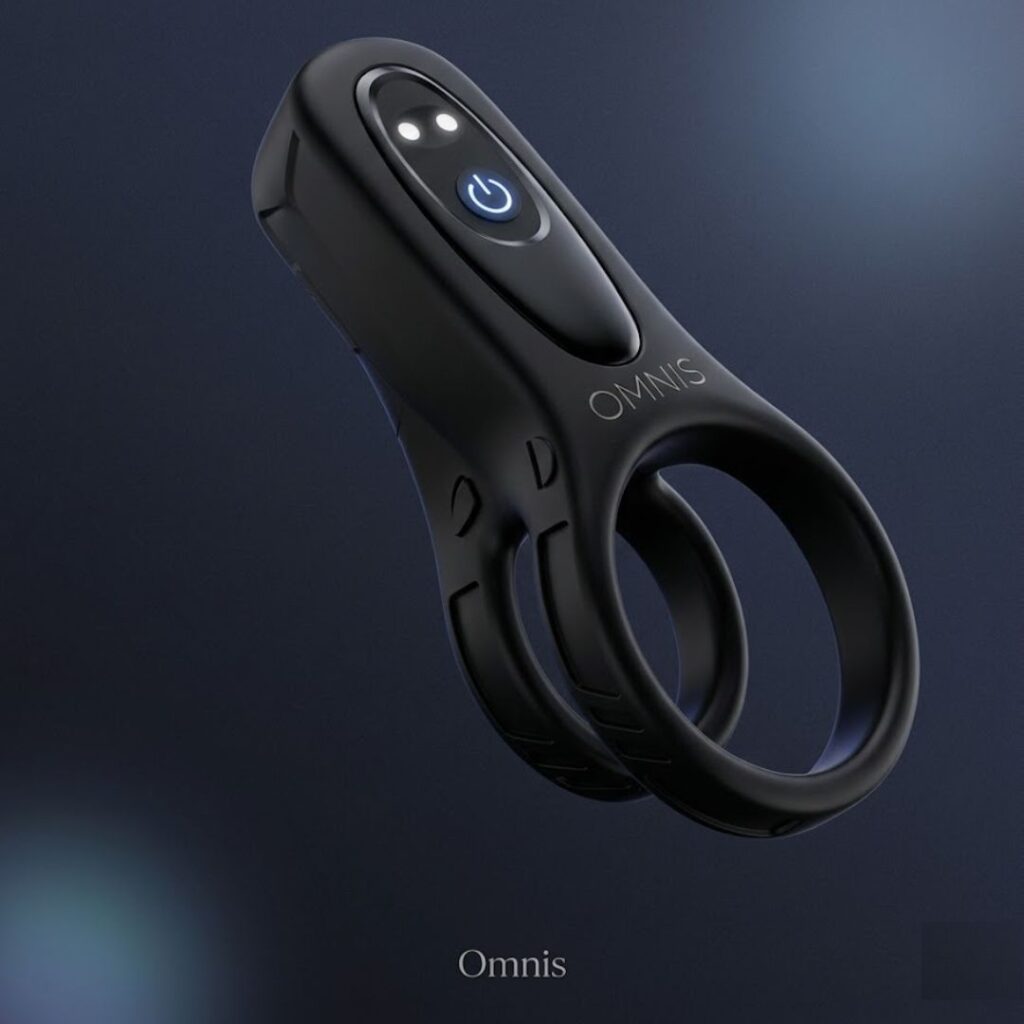
When Marcus showed him the device, he said something I won’t forget:
"You've spent years forcing blood into tissue that was dying. This reactivates the tissue. They are completely different things."
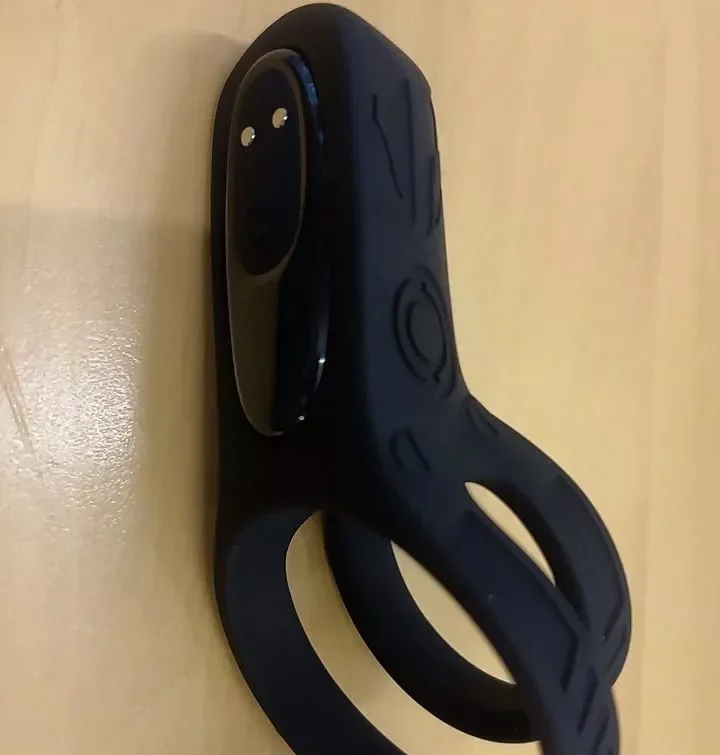
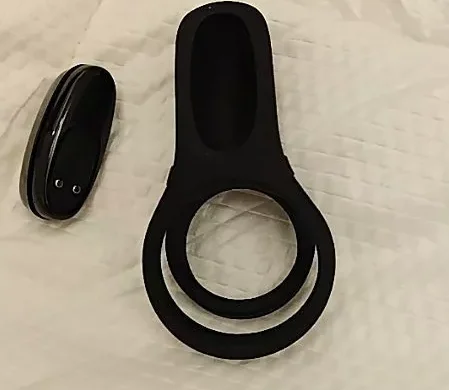
The Omnis is a penile electrical muscle stimulation device.
It is not a toy.
It is not a vibrator with a scientific name to appear credible.
It is the same principle physiotherapists use in electrical muscle stimulation — applied to cavernous tissue, which is smooth muscle, and which obeys the same laws as any muscle in the body.
What it does, specifically:
It emits low-frequency electrical impulses calibrated for cavernous smooth muscle.
These impulses mimic the nerve signal that the parasympathetic nervous system should be sending with full efficiency — and which, in a man with neuromuscular disconnection, arrives weak, delayed, or distorted.
The muscle receives the signal. Contracts. Relaxes. Contracts again.
This forced cycle — independent of arousal, independent of the current state of the nerve, independent of hormone or medication — does two things no pill in the world does:
1. Keeps the muscle tissue active, preventing and reversing fibrosis progression in areas that still have living muscle.
2. Forces the cavernous nerve to retransmit — exactly as physiotherapy forces nerve reconnection in an atrophied muscle before asking it to work on its own.
The nerve learns to transmit again. The muscle learns to respond again. The neuromuscular pathway is rebuilt. Not artificially masked. Rebuilt.
This is not magic. It is the same physics that restores the shoulder after surgery, the knee after a fracture, the pelvic floor after childbirth.
The difference is that for the shoulder you can access a physiotherapist. For cavernous tissue, until now, there was nothing with easy access. A specialist clinic charges £120 or more per session.
The protocol runs to 16 sessions. And you still have to walk into a room and explain the problem to a stranger in a white coat.
Omnis delivers the same mechanism. In your home. On your schedule. Without a conversation with anyone.
The Proof the Pharmaceutical Industry Doesn't Want You to Know
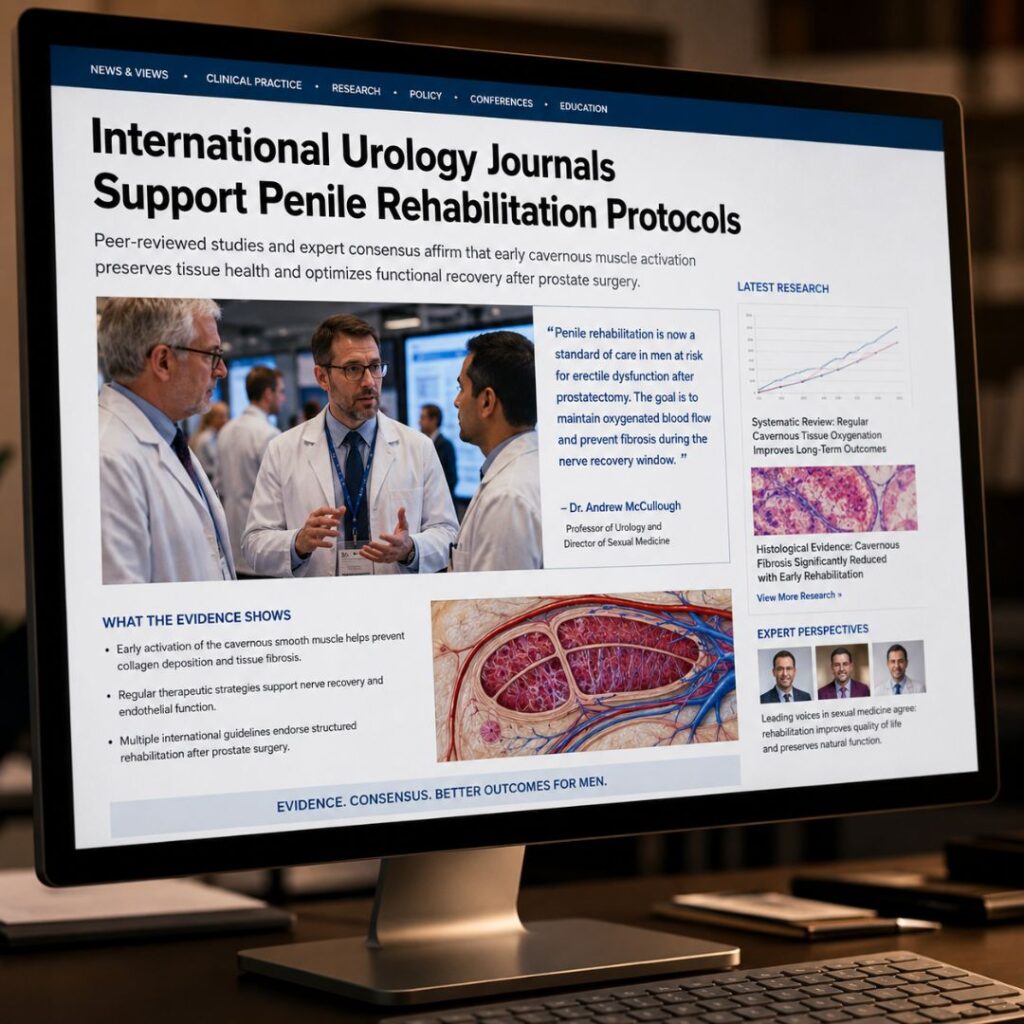
This is published. In peer-reviewed international urology journals.
This is not internet theory. This is not pseudoscience from a supplements blog.
The post-prostatectomy penile rehabilitation protocol is consensus amongst specialists in male sexual medicine since the early 2000s.
The principle: keep the cavernous muscle active during the period of nerve recovery to prevent permanent fibrosis.
In plain English: the world’s leading specialists in male penile health agree that the cavernous muscle requires regular activation to avoid fibrosis.
And they agree that when this doesn’t happen, fibrosis advances progressively and irreversibly beyond a certain point.
This consensus exists. It is published.
Your doctor — if honest — will confirm it.
The question to ask at your next appointment is:
"Doctor, at any point over the past few years, did you prescribe any form of cavernous neuromuscular rehabilitation to prevent corpus cavernosum fibrosis — or did you simply prescribe sildenafil?"
Prepare yourself for the silence.
What Happens When the Nerve Starts Talking to the Muscle Again
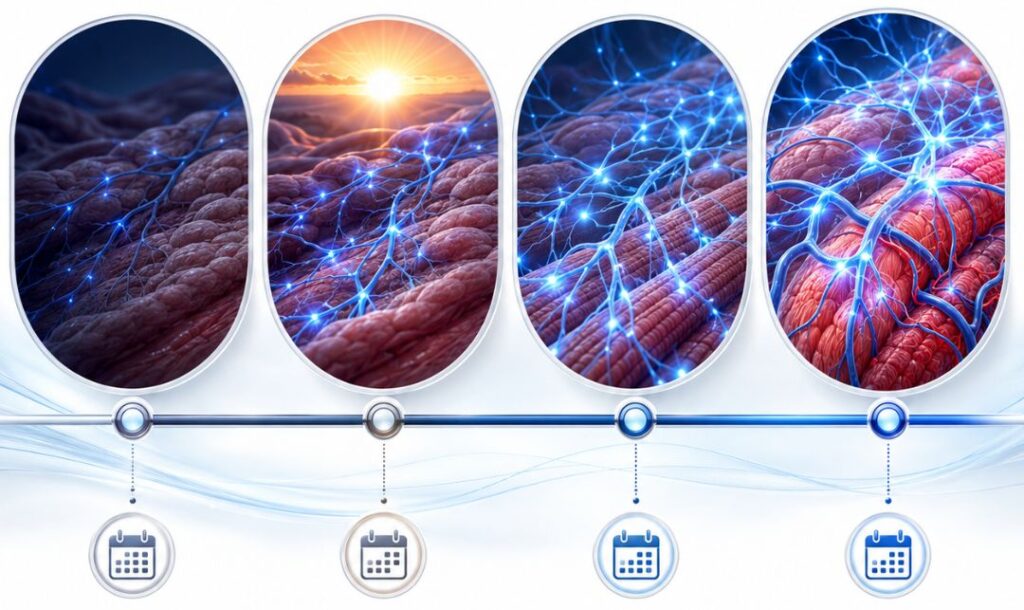
The progression is not uniform.
Every man has a different window, a different extent of impairment.
But the pattern repeats itself:
Weeks 1 and 2.
The tissue responds to the stimulus with tingling and localised warmth. Not pleasure.
Activation — the muscle contracting in response to the electrical impulse for the first time in months or years.
The nerve begins receiving the external stimulus and retransmitting with reinforced efficiency.
You are waking something that was in a coma.
Weeks 3 and 4.
The clearest clinical marker of reversal: a morning erection.
Spontaneous. Without stimulus. Without a pill.
On an ordinary Tuesday morning, you wake up and it’s there — and you don’t fully understand what happened, but you do at the same time.
The autonomic nervous system has recovered its nocturnal function of cavernous activation.
The muscle is responding without assistance.
Month 2.
Erectile response in situations of arousal without a pill begins to appear. Inconsistent still — sometimes yes, sometimes no. But it appears.
Chemical dependency begins to diminish naturally because what sustained it — neuromuscular deterioration — is being reversed.
Month 3 onwards.
For men at Stage 1 and early Stage 2: erectile function rebuilt without chemical dependency.
Not as it was at 25. As it is for a healthy 45-year-old man with an intact neuromuscular pathway. With consistency. With confidence.
Without calculating whether you took the pill at the right time.
This is not quick. This is not instant. It will not work in three days.
Physiotherapy for an atrophied muscle does not work in three days.
It works over weeks of consistency.
And those who want instant results will carry on taking the pill and carry on losing tissue whilst thinking everything is fine.
Those who understand they are rebuilding a neuromuscular pathway will have, within two months, what no pill can give: function that does not disappear when you stop taking it.
Men Who Used the Reversal Window Whilst It Was Still Open
"My first reaction was dismissal. It seemed like something from an adult shop with a scientific name to appear legitimate. I used it with complete scepticism for the first two weeks. In the third week, my wife asked what had changed about me. I said nothing. Only I knew what had changed. Two months later, I wasn't taking anything. It wasn't libido that came back — libido never left. It was the certainty that my body would respond. That certainty I hadn't had in three years."
— H.F., 49. Used Viagra for 2 years before Omnis.
"What convinced me was the plaster cast analogy. I broke my wrist in 2019. The physiotherapist used electrical stimulation on my forearm for six weeks. When I read the Omnis explanation, I thought: that's exactly it. The same logic. Why would I doubt it? The physio did to my wrist what Omnis does to the cavernous tissue. In the fourth week of use, morning erection. I felt like ringing my urologist and asking why he'd never explained any of this to me."
— A.R., 52, engineer.
"Three relationships in the past four years. All three ended. Not directly because of this — but because of what it did to my head. I was a different person. Always anxious. Always calculating. Omnis wasn't just about rebuilding the tissue. It was about rebuilding who I was before I started being afraid of myself."
— T.M., 44.
"My urologist told me to increase the Viagra dose. I did. It worked for another two months. Then stopped working again. At that point I realised I was in a spiral. The more I took, the more the tissue lost its capacity to respond, the more I needed to take. Omnis was the first thing that made biological sense. Six weeks later, I'd halved the Viagra. Twelve weeks later, I'd stopped entirely. My urologist asked what I'd done differently. I told him I'd started physiotherapy. I wasn't lying."
— P.C., 55, solicitor.
The Objections in Your Head Right Now
"My doctor never mentioned this. If it were important, he would have."
Your doctor has roughly twelve minutes per appointment, a diary full of thirty patients a day, and a standard protocol.
The standard protocol for erectile dysfunction is a PDE5 inhibitor. Full stop.
Cavernous neuromuscular rehabilitation is a specialist sub-field. Pelvic physiotherapists and sexual medicine specialists work with it.
Your standard GP or urologist doesn’t refer to that field — just as he doesn’t refer every patient with mild back pain to specialist physiotherapy.
You receive the minimum protocol. The minimum protocol is the pill.
"Electrical stimulation there seems extreme."
Electrical muscle stimulation — EMS — has been used in physiotherapy for decades.
On post-surgical knees. On fractured shoulders. On post-partum pelvic floors. It is the gold standard for rehabilitating atrophied muscle tissue.
What Omnis delivers are very low-amplitude impulses calibrated for smooth muscle — not for sensory nerve tissue.
The sensation is mild tingling and pulsation. If you’ve ever had physiotherapy, you’ve felt something identical. No one thought it extreme when it was your knee.
"My testosterone is normal. My doctor said everything's fine."
Testosterone and the cavernous neuromuscular pathway are different systems.
Testosterone regulates libido, mood, and systemic muscle mass. Erection is controlled by the parasympathetic nervous system — autonomous, separate from the hormonal system.
A man can have the testosterone of an athlete and advanced cavernous neuromuscular disconnection simultaneously.
A normal testosterone result says nothing about the state of your cavernous nerve or your smooth muscle.
That is why many men with perfectly normal hormonal panels continue to experience progressive erectile dysfunction — because the problem is in the neuromuscular pathway, not the hormone.
‘It looks like something from a sex shop. I don’t feel comfortable with it.’
We understand. And that is exactly what the pharmaceutical industry wants you to think.
A penile device used in urological rehabilitation programmes is manufactured in cutting-edge clinics, covered by health insurance in some countries, and documented in peer-reviewed scientific publications.
The discomfort is cultural, not medical. And it is this cultural discomfort that keeps men taking pills for years whilst their tissue silently deteriorates
"I've tried natural remedies before and they didn't work."
“Natural remedies” means supplements. Supplements act systemically — hormone levels, general vascular function, mood.
No ingestible supplement reaches the cavernous nerve and forces it to retransmit. No supplement contracts the cavernous smooth muscle.
Omnis is not ingestible. It is physical. It acts directly on the tissue with an electrical mechanism that has no equivalent in any capsule or pill of any origin.
"What if it doesn't work for me?"
You have a 60-day unconditional guarantee.
Result or full refund. No questionnaire designed to make you give up halfway.
But here is the real question: what if it does work — and you hadn’t tried it because you were worried about spending £39?
Two Paths. One You Already Know.

The first one you’re already living.
The pill. The mental arithmetic before every encounter. The private ritual of shame you tell no one about.
The feeling that you’re losing ground month by month without understanding why.
The partner who says she doesn’t mind, and the silence between you that has a specific weight — the weight of something neither of you will name.
And at some point ahead, if you change nothing, a night on which the pill will not work. It won’t be gradual.
It will be one specific night, with one specific person, and you will know in that moment that something has passed a point of no return.
The second path begins now.
Not with a promise of miracles. With biology. With the same mechanism a physiotherapist uses on atrophied muscle.
With eight weeks of consistency. With the marker that will tell you it’s working — a morning erection on a morning you weren’t expecting it — before you need any other proof.
With the possibility that in three months, you throw the pill away — not because someone told you to, but because your tissue no longer needs it.
The only thing between you and the second path is this decision:
Do you act whilst the reversal window is open — or do you wait until you discover it has closed?
There is no third option. The fibrosis does not pause whilst you deliberate.
What You'll Invest — And Why £39 Is the Lowest Price This Problem Will Ever Be
I’ll be straightforward about the numbers, because you deserve honesty after years of being misled by pill marketing.
One session of specialist pelvic physiotherapy with neuromuscular electrical stimulation at a private clinic: between £80 and £150 per session. Recommended protocol: 12 to 20 sessions. Total: £960 to £3,000. Before travel, referral consultation, or time off work.
A penile neuromuscular stimulation device sold through medical channels, specialist distributors, or sexual medicine clinics: between £250 and £700. With distributor margin, hospital markup, and channel costs.
One month of branded Viagra: £50 to £120. Every month. Without treating anything. Without reaching the day when you stop because you no longer need to.
Just month after month funding a dependency that worsens the underlying problem whilst masking the symptom.
We sell direct. No distributor. No medical channel markup. No £200 consultation to receive a prescription for what you already know you need.
Medical channel and specialist clinic price:
£120.00
Price through specialist distribution
Your investment — direct, no middleman:
£39
One-off payment. No subscription. No recurring cost.
No monthly charge that rises in dose whilst the problem worsens.
A single session of specialist pelvic physiotherapy costs more than this. Omnis delivers the complete eight-week protocol at home.
But here is what makes this a straightforward financial decision:
How much will you spend on Viagra over the next 12 months? The next 24? And in 36 months, when your current dose is no longer sufficient, how much will the next step cost — what your doctor will call a “more robust alternative”?
£39 now, or years of rising expenditure on something that has never treated anything.
The fibrosis does not wait for you to do the sums.
What You Receive
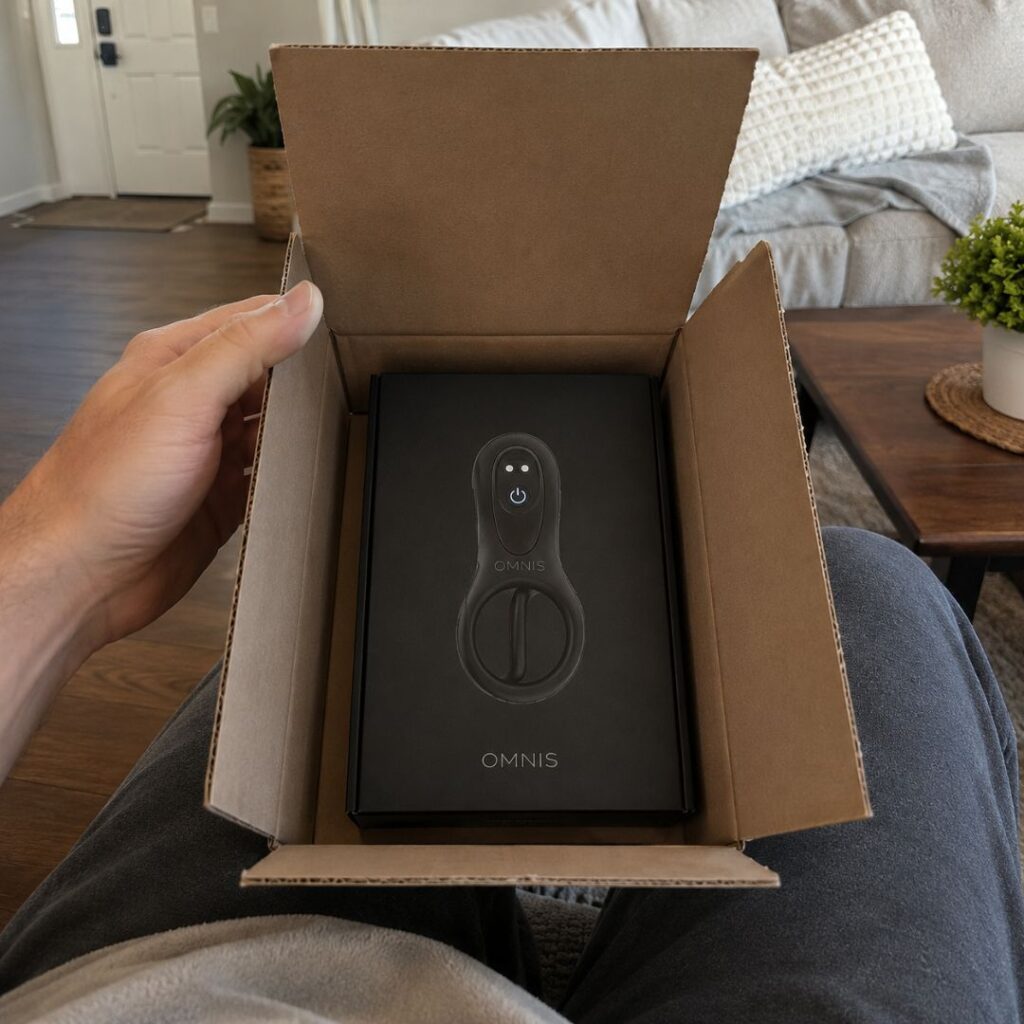
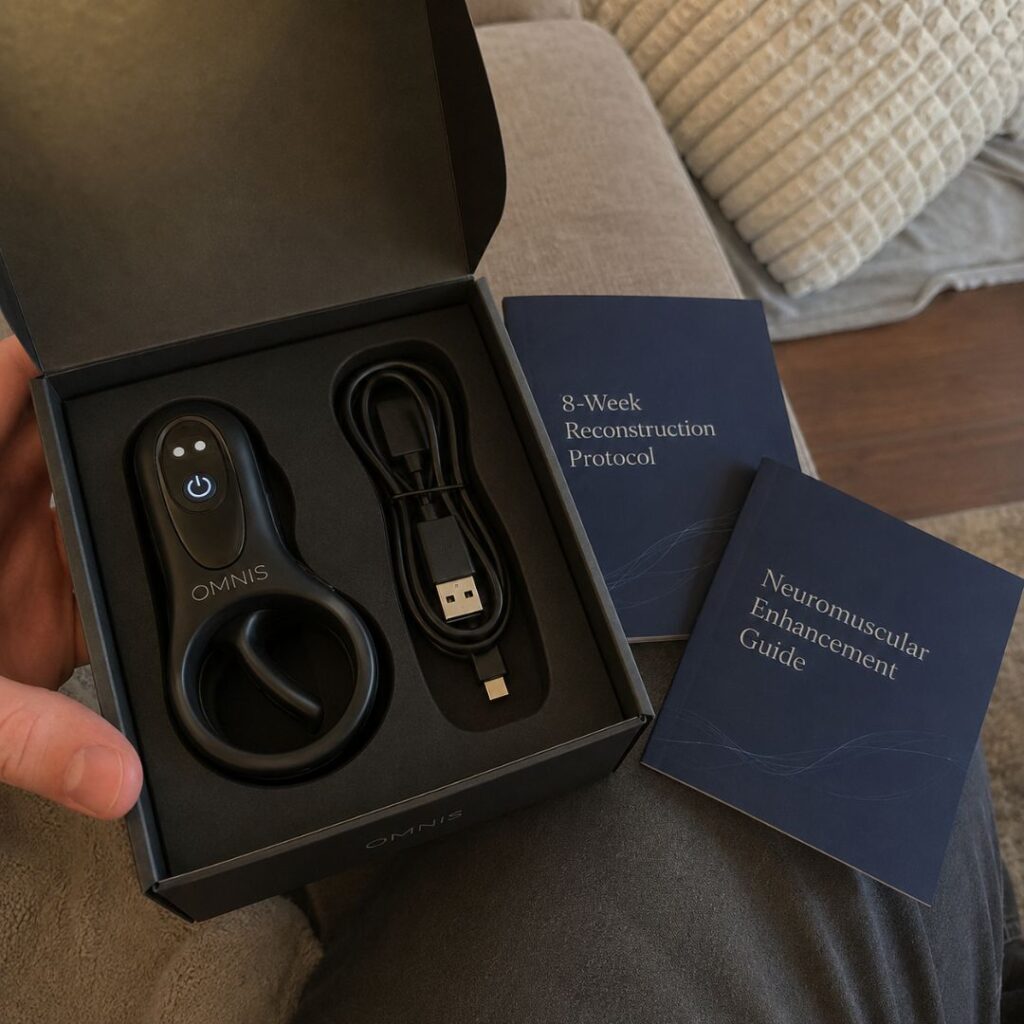
- The Omnis — penile electrical muscle stimulation device, impulses calibrated for cavernous smooth muscle, 5-level adjustable intensity, certified medical-grade materials, USB charging
- 8-Week Reconstruction Protocol — session-by-session schedule, weekly intensity progression, clinical progress markers so you can monitor your own tissue
- Neuromuscular Enhancement Guide — what accelerates nerve reconnection and what sabotages the rehabilitation process; what the literature says about cavernous circulation
- 100% discreet packaging — no content identification, no product name, no external branding
- 60-Day Unconditional Guarantee — result or full refund without question
The Guarantee That Means You Have No Risk Whatsoever

Sixty days. Full protocol. If after following the protocol consistently you see no difference in erectile quality, in the frequency of morning erections, in the ability to respond without a pill — you get in touch and receive 100% of your money back.
No twelve-question form designed to make you abandon the process. No “prove you used it correctly.” No small print.
Your financial risk is zero.
The only real risk is closing this page now — and waking up six months from now with more fibrosis, greater pill dependency, and a narrower reversal window than you have today.
That risk is yours. We cannot carry it for you.
“Wasn’t expecting much but honestly surprised. Arrived fast, totally discreet. Working better than I thought.”

“Good product, no issues with payment and delivery was quick. Felt safer knowing it was all discreet.”
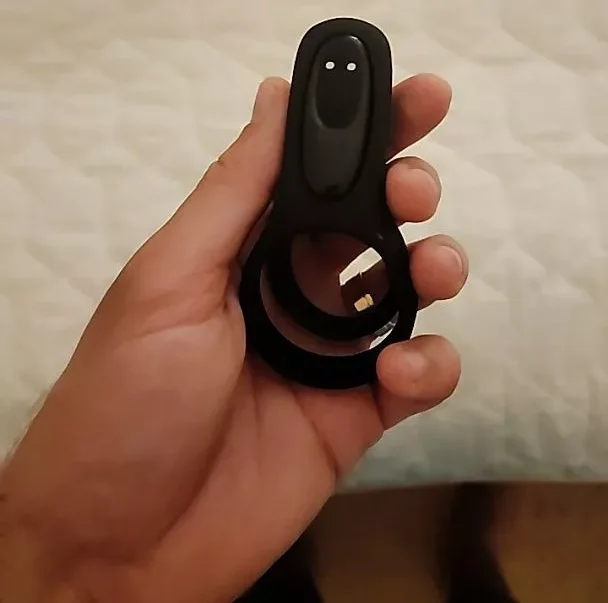
“Came in plain packaging, nobody could tell what it was. Tried for a week and I can feel a real difference. Happy so far.”
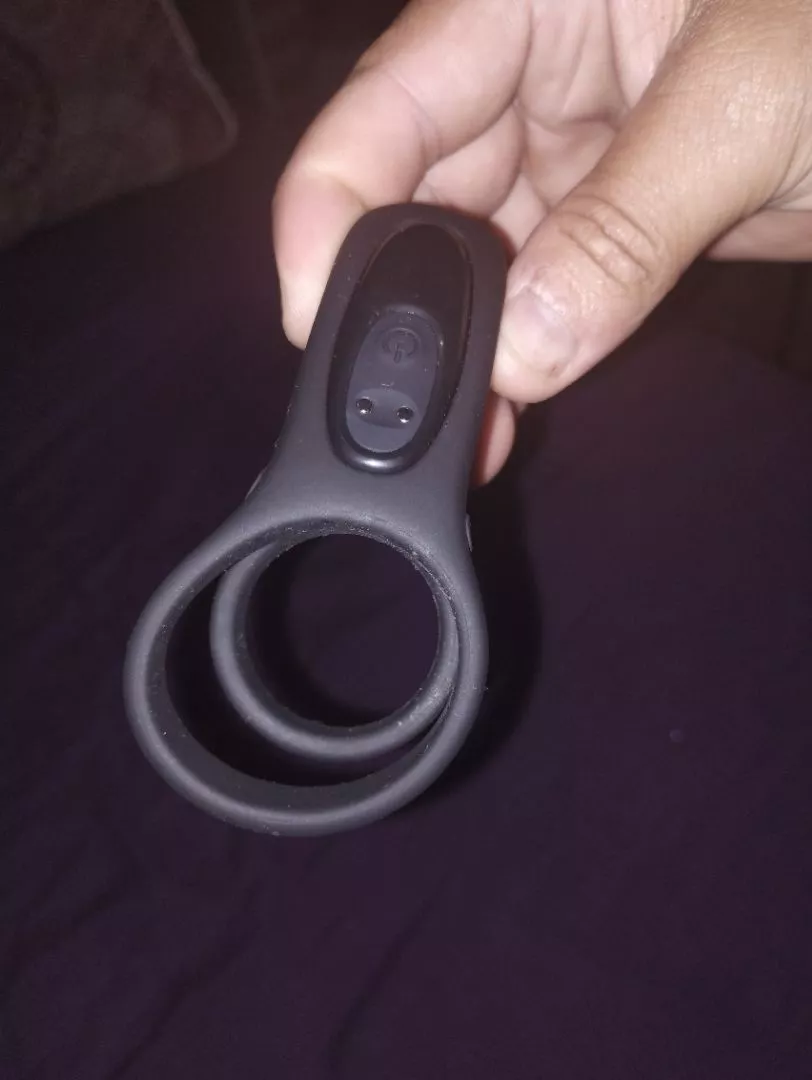
“Honestly didn’t want my neighbours knowing what I ordered. Package was completely blank. Already on my second order.”
“Works as described. Bit sceptical at first but it does what it says. Free shipping was a nice bonus.”
The Decision
You’ve read this far. That means you already knew, at some level, that something was wrong with the path you were on.
That the pill resolved but didn’t cure. That the dependency was growing. That there was a process happening inside the tissue that no one was treating.
You were right.
Now you have a name for the process. You have the reversal mechanism. You have the window — open, for now, but not indefinitely.
What you do with that is the only thing that separates the man who will be well in three months from the man who will be worse in a year.
The reversal window is open.
The tissue doesn’t wait. The fibrosis doesn’t pause.
£39 One-off payment · 60-day guarantee · Discreet delivery
You are not buying a product. You are using the window whilst it is still open.
One Last Thing
There is a specific moment that men who have been through this describe in almost identical terms.
It’s a morning. An ordinary weekday. You planned nothing. You took nothing. You wake up and it’s there — the erection that hadn’t appeared spontaneously in months. The body responding without being forced. The signal that the nerve was learning to transmit again, finally arriving with clarity.
You don’t leap out of bed. You lie still. Perhaps for a full minute.
It’s not the organ you’re recognising. It’s yourself. The man who existed before the mental arithmetic, before the private ritual of shame, before the silence that settled between you and the people you love.
That moment exists. It is on the other side of eight weeks of consistent protocol.
And it begins with a £39 decision you make now — or don’t make — whilst there is still something left to rebuild.
Discreet delivery · No content identification · 60-day no-questions guarantee
Robert. Three Months Later.
It wasn’t in the first week.
In the first week, Robert used the device with total scepticism. He felt a strange tingling. He thought he was being an idiot. That he was desperate.
In the third week, he woke up on a Wednesday morning with a sensation he hadn’t had in two years. He lay completely still for a full minute.
Then went to the bathroom. Looked in the mirror. Said nothing for a long time.
In the second month, he and his wife had a conversation that neither of them had started. She said she’d noticed the difference. That she was happy. That her Robert had come back.
He didn’t explain what he’d done. He only said he’d stopped treating the symptom and started rebuilding the tissue.
She didn’t quite follow the phrase. She didn’t need to.
The elastic coma was over.
The reversal window had been open at the moment Robert acted. It would have closed had he waited another six months taking the pill and believing everything was fine.
He didn’t wait.
The question now is about you.

Discreet delivery · One-off payment · 60-day unconditional guarantee
REFERENCES
(1) https://www.health.harvard.edu/newsletter_article/Testosterone_aging_and_the_mind
(2) https://www.upi.com/Health_News/2012/06/24/Low-testosterone-not-normal-part-of-aging/21971340591160/
(3) https://joe.bioscientifica.com/view/journals/joe/217/3/R25.xml
(4) https://www.ncbi.nlm.nih.gov/pubmed/2202881
(5) https://www.ncbi.nlm.nih.gov/pmc/articles/PMC4154787/
(6) https://www.ncbi.nlm.nih.gov/pubmed/25982085
(7) https://www.ncbi.nlm.nih.gov/pmc/articles/PMC5054608/
(8) https://www.ncbi.nlm.nih.gov/pubmed/22552705
(9) https://www.ncbi.nlm.nih.gov/pmc/articles/PMC5649360/
(10) https://www.betweenusclinic.com/sex-surveys/worst-male-sexual-issue-survey/
(11) https://thriva.co/hub/womens-health/understand/how-your-hormones-affect-your-energy-levels#testosterone
(12) https://www.ncbi.nlm.nih.gov/pmc/articles/PMC4772354/
(13) https://www.webmd.com/men/what-low-testosterone-can-mean-your-health#1
(14) https://www.healthline.com/health/low-testosterone/dangerous#symptoms
(15) https://www.health.harvard.edu/mens-health/is-testosterone-therapy-safe-take-a-breath-before-you-take-the-plunge
(16) https://www.sciencedaily.com/releases/2019/07/190718123258.htm
(17) https://jamanetwork.com/journals/jama/fullarticle/2603929
(18) https://www.ncbi.nlm.nih.gov/pubmed/20592293
(19) https://www.ncbi.nlm.nih.gov/pubmed/11402256
(20) https://www.ncbi.nlm.nih.gov/pubmed/6298507
(21) https://www.ncbi.nlm.nih.gov/pmc/articles/PMC5988228/
(22) https://www.ncbi.nlm.nih.gov/pubmed/8488634
(23) https://www.sciencedirect.com/science/article/abs/pii/0093691X85901827
(24) https://www.denverpost.com/2008/02/01/rodeo-group-tests-bulls-to-prevent-beefing-up-with-steroids/
(25) https://www.ncbi.nlm.nih.gov/pubmed/1906089
(26) https://www.ncbi.nlm.nih.gov/pubmed/3009677
(27) https://www.ncbi.nlm.nih.gov/pubmed/365598
(28) https://www.sciencedirect.com/topics/neuroscience/GnlH-antagonists
(29) https://www.sciencedaily.com/releases/2009/06/090615171618.htm
(30) https://www.meghantelpner.com/blog/soy-foods-hidden-sources-health-and-environmental-impact/
(31) https://news.ncsu.edu/2008/07/new-study-shows-compounds-from-soy-affect-brain-and-reproductive-development/
(32) https://www.ncbi.nlm.nih.gov/pmc/articles/PMC2853991/
(33) https://www.npr.org/2011/03/02/134196209/study-most-plastics-leach-hormone-like-chemicals
(34) https://www.healthcmi.com/Nursing-News-and-Information/276-estrogen-exposure-found-in-store-receipts
(35) https://www.sciencedirect.com/science/article/abs/pii/S030698770600702X
(36) https://link.springer.com/referenceworkentry/10.1007%2F978-3-319-44441-3_32
(37) https://www.ncbi.nlm.nih.gov/pubmed/9758439?dopt=Abstract
(38) https://jamanetwork.com/journals/jama/fullarticle/2603929
(39) https://www.ncbi.nlm.nih.gov/pubmed/17568384
(40) https://www.ncbi.nlm.nih.gov/pmc/articles/PMC3739276/
(41) https://aip.scitation.org/doi/pdf/10.1063/1.4991216
(42) https://www.ncbi.nlm.nih.gov/pubmed/24386995
(43) https://www.webmd.com/vitamins/ai/ingredientmono-1132/eurycoma-longifolia
(44) https://hqlo.biomedcentral.com/articles/10.1186/1477-7525-1-77
(45) https://www.ncbi.nlm.nih.gov/pubmed/21671978/
(46) https://www.ncbi.nlm.nih.gov/pubmed/23754792
(47) https://onlinelibrary.wiley.com/doi/full/10.1111/and.12482
(48) https://www.ncbi.nlm.nih.gov/pubmed/20078516/
(49) https://www.ncbi.nlm.nih.gov/pmc/articles/PMC3902593/
(50) https://www.ncbi.nlm.nih.gov/pmc/articles/PMC3902593/
(51) https://examine.com/supplements/chlorophytum-borivilianum/
(52) https://examine.com/supplements/chlorophytum-borivilianum/
(53) https://ods.od.nih.gov/factsheets/Zinc-HealthProfessional/
(54) https://www.medicalnewstoday.com/articles/5702.php
(55) https://www.ncbi.nlm.nih.gov/pubmed/20446777
(56) https://www.ncbi.nlm.nih.gov/pubmed/596207
(57) https://www.ncbi.nlm.nih.gov/pubmed/21744023
(58) https://www.ncbi.nlm.nih.gov/pubmed/8875519
(59) https://www.ncbi.nlm.nih.gov/pmc/articles/PMC4623306/
(60) https://www.ncbi.nlm.nih.gov/pubmed/1619184
(61) https://www.ncbi.nlm.nih.gov/pubmed/21129941/
(62) https://www.ncbi.nlm.nih.gov/pubmed/28091641
(63) https://www.endocrine-abstracts.org/ea/0028/ea0028p313
(64) https://www.eurekalert.org/pub_releases/2007-07/pw-pw1070207.php
(65) https://www.iasj.net/iasj?func=fulltext&aId=71548
(66) https://www.ncbi.nlm.nih.gov/pmc/articles/PMC3665023/